
Quality Control Plan: A Practical Framework for Manufacturers
🏭 How to Build a Quality Control Plan That Actually Reduces Defects
Most manufacturers operate with a Cost of Poor Quality (COPQ) between 15% and 25% of revenue — driven by scrap, rework, and customer returns. A structured Quality Control plan is the foundation for reversing that. It ensures process consistency, compliance with ISO 9001, and measurable performance improvement across the entire production system.
📊 4 KPIs That Connect Quality to Business Performance
🔍 Focus Where Defects Actually Originate
🛠️ 4 Structured Control Methods
-
1
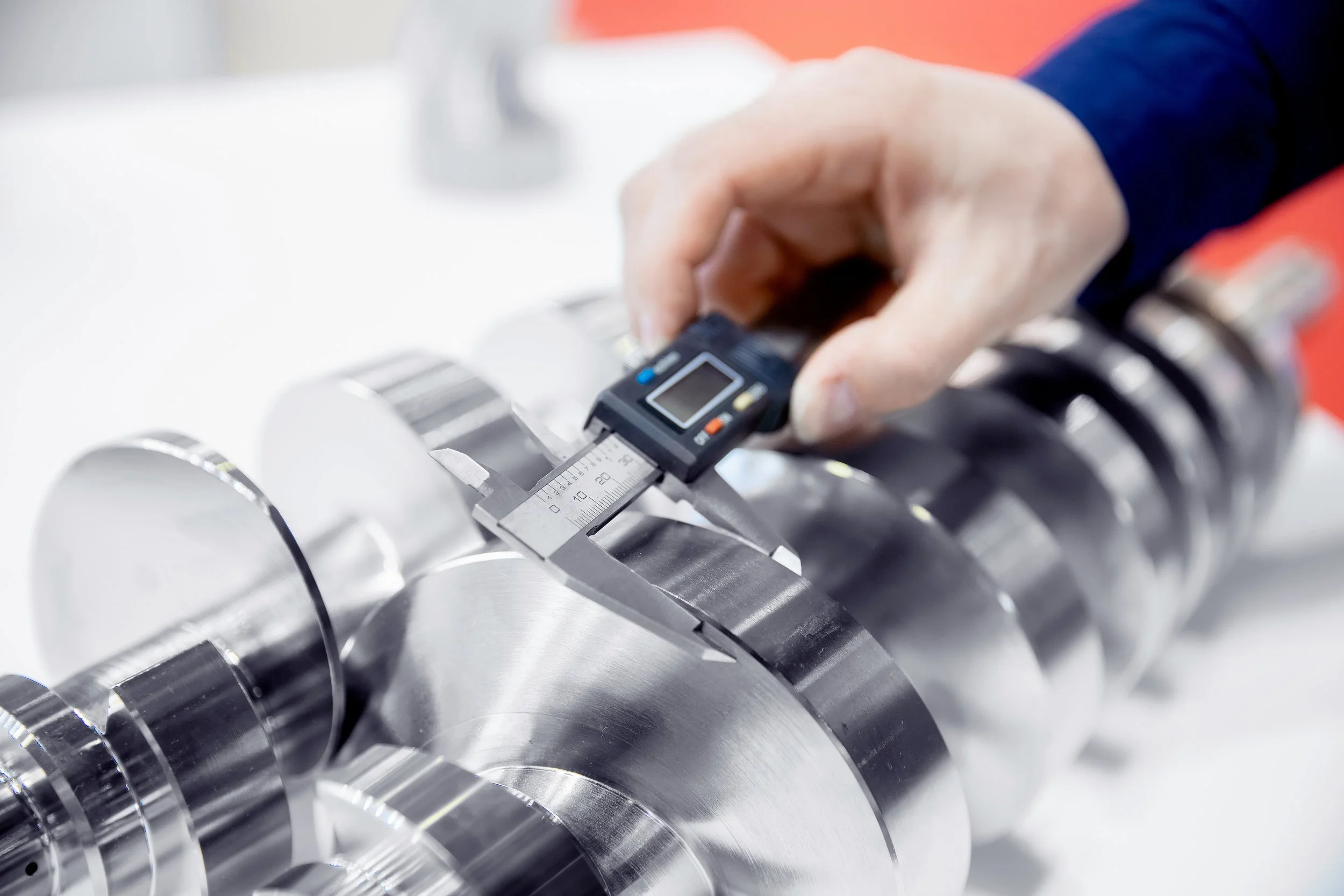
Statistical Process Control (SPC) Monitors process variation in real time using control charts — catching drift before it produces defects.
-
2
AQL Sampling Plans Defines statistically valid sample sizes for incoming and outgoing inspection — balancing thoroughness with line efficiency.
-
3
Control Plans Documents what to control, how to measure it, and what action to take when limits are exceeded — at every critical step.
-
4
Automated Inspection Systems Machine vision and sensor-based checks eliminate human error and enable 100% inspection at full line speed.
📋 Example Control Plan
| Process Step | Risk | Control Method | Frequency |
|---|---|---|---|
| Assembly | Misalignment | Visual inspection | Every batch |
| Machining | Dimensional error | SPC measurement | Hourly |
📁 Compliance Starts with Consistency
-
1
Standard Operating Procedures (SOPs) Define the one right way to execute each process step — eliminating variability caused by operator interpretation.
-
2
Inspection Records Create an auditable trail of every check performed — essential for ISO 9001 compliance and customer audits.
-
3
Traceability Systems Link every unit to its production data — enabling fast, accurate root cause analysis when defects escape to the field.
📈 What You Don't Measure, You Can't Fix

🔄 3 Methods That Prevent Recurrence
-
1
PDCA (Plan-Do-Check-Act) The backbone of structured improvement — cycle through it fast, fix the right things, and lock in the gains permanently.
-
2
Root Cause Analysis (5 Why, Ishikawa) Don't treat symptoms. These tools force teams to dig to the actual cause — the one fix that prevents recurrence, not just the next occurrence.
-
3
Lean Manufacturing Principles Defects are waste. Lean thinking embeds quality prevention directly into process design — eliminating the conditions that create defects.
🎯 5 Steps from Plan to Execution
- Define KPIs and targetsStep 1
- Identify critical process stepsStep 2
- Implement control methodsStep 3
- Standardize documentationStep 4
- Monitor and improve continuouslyStep 5
- Aligns quality to business performanceFoundation
- Focuses effort on highest-risk areasEfficiency
- Reduces variability and early defect detectionPrevention
- Ensures ISO 9001 compliance and traceabilityCompliance
- Drives lasting cost and quality gainsROI
Build a quality management system that does more than tick boxes.
This training gives your team the foundations to create a structured, practical QMS that improves consistency, reduces the cost of poor quality, and supports smarter decisions across the business. Covering ISO 9001, the 7 quality principles, PDCA, and the documentation framework behind an effective system, it helps you turn quality into a real operational advantage.
Designed for manufacturing leaders and quality teams, this module shows how to move from reactive problem-solving to a more disciplined, data-driven approach. The result is better control, clearer processes, stronger alignment, and a quality system that supports growth rather than slowing it down.
7. Why Partner with HNG Consulting?
At HNG Consulting, we design and implement tailored quality control plans aligned with your product, process, and industry requirements, ensuring consistent quality, compliance, and measurable performance improvement.
Customized QC plans
Adapted to your specific operational, product, and regulatory requirements, ensuring alignment with standards such as ISO 9001 and industry-specific frameworks.
Proven expertise
Deep experience in quality management, process improvement, and tools such as SPC, FMEA, and root cause analysis to reduce defects and improve process capability.
Ongoing support
Continuous guidance to evolve your quality control plan as your operations scale, including performance tracking through KPIs such as defect rate, OEE, and cost of poor quality.