
Good Manufacturing Practices: A complete Guide
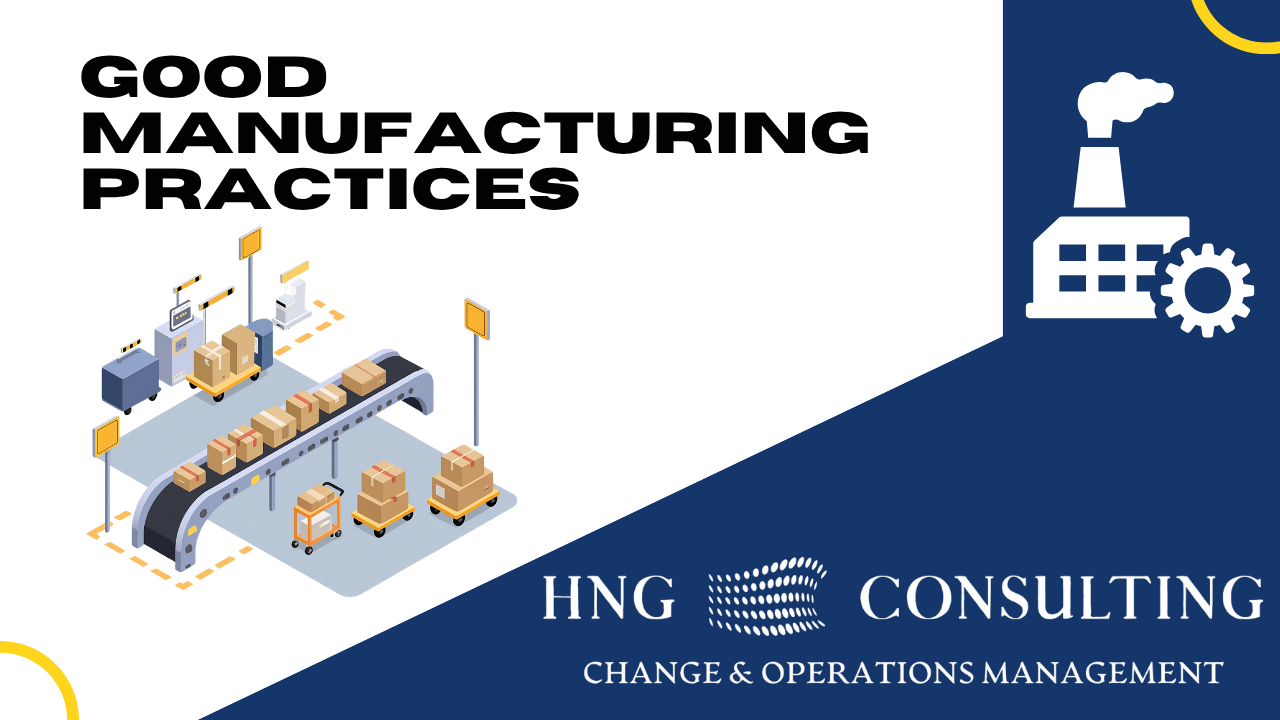
Good Manufacturing Practices (GMP) are a set of guidelines and regulations designed to ensure that products are consistently produced and controlled according to defined quality standards. GMP is essential in industries such as pharmaceuticals, medical devices, food, and cosmetics.
Beyond regulatory compliance, GMP plays a critical role in reducing risk, improving process consistency, and minimizing the cost of poor quality.
This guide provides a practical overview of GMP principles and explains how they contribute to quality, compliance, and operational performance.
1. What Are Good Manufacturing Practices?
GMP defines the requirements for manufacturing processes, facilities, and controls to ensure product quality and safety. It covers all aspects of production, from raw materials to finished products.
- Ensure consistent product quality and safety
- Prevent contamination, mix-ups, and errors
- Establish controlled and standardized processes

2. Key Principles of GMP
GMP is based on a set of core principles that ensure control, consistency, and traceability across manufacturing operations.
- Documentation and record control
- Process validation and standardization
- Training and competency of personnel
- Equipment qualification and maintenance
- Traceability of materials and products
3. GMP and Risk Management
One of the main objectives of GMP is to reduce risks that cannot be eliminated through testing alone. This includes contamination, human error, and process variability.
- Implement controlled environments and procedures
- Use validation and qualification to ensure process reliability
- Apply risk-based approaches to critical processes

4. Financial Impact of GMP Compliance
While GMP is often viewed as a regulatory requirement, it has a significant impact on financial performance by reducing risks, improving efficiency, and minimizing waste.
- Reduced risk of product recalls and regulatory penalties
- Lower cost of poor quality (scrap, rework, returns)
- Improved process efficiency and resource utilization
5. Documentation and Traceability in GMP
Documentation and traceability are central to GMP, ensuring that every step of the manufacturing process is controlled, recorded, and verifiable.
- Maintain accurate and controlled documentation
- Ensure full traceability of materials and batches
- Support audit readiness and regulatory compliance
Build a quality management system that does more than tick boxes.
This training gives your team the foundations to create a structured, practical QMS that improves consistency, reduces the cost of poor quality, and supports smarter decisions across the business. Covering ISO 9001, the 7 quality principles, PDCA, and the documentation framework behind an effective system, it helps you turn quality into a real operational advantage.
Designed for manufacturing leaders and quality teams, this module shows how to move from reactive problem-solving to a more disciplined, data-driven approach. The result is better control, clearer processes, stronger alignment, and a quality system that supports growth rather than slowing it down.
6. GMP and Continuous Improvement
GMP systems should evolve continuously to improve performance and adapt to changing requirements. Integrating GMP with continuous improvement methodologies enhances both compliance and efficiency.
- Use internal audits to identify improvement opportunities
- Apply root cause analysis to non-conformities
- Integrate Lean and Six Sigma for process optimization
7. Common GMP Challenges
Organizations often face challenges when implementing and maintaining GMP systems, particularly in complex or rapidly changing environments.
- Maintaining consistent documentation and records
- Ensuring employee competency and training
- Managing process variability and deviations
8. Why Partner with HNG Consulting?
At HNG Consulting, we help organizations implement GMP systems that go beyond compliance to deliver measurable improvements in quality, efficiency, and financial performance.
GMP system implementation
Design and implementation of GMP-compliant systems aligned with regulatory and industry requirements.
Risk and compliance optimization
Identification and mitigation of compliance risks to reduce audit findings and operational disruptions.
Performance-driven quality systems
Integration of GMP with KPIs such as defect rate, OEE, and cost of poor quality to drive operational excellence.